Average LTI 2026 still 52 points — Novi Pazar shares the top with Veliko Gradište


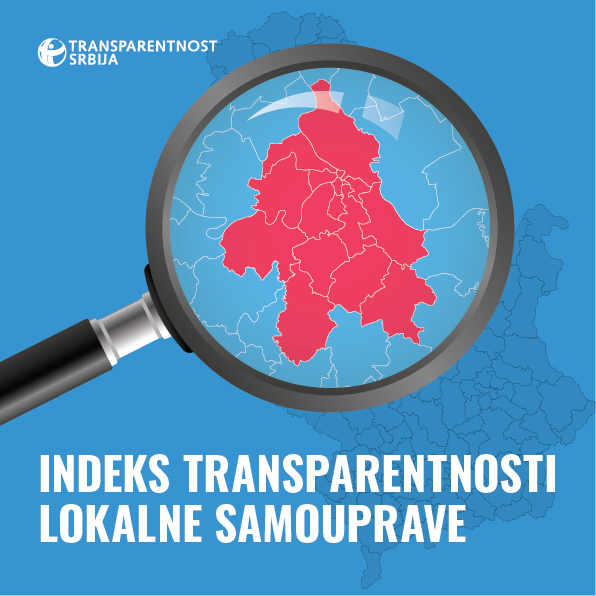
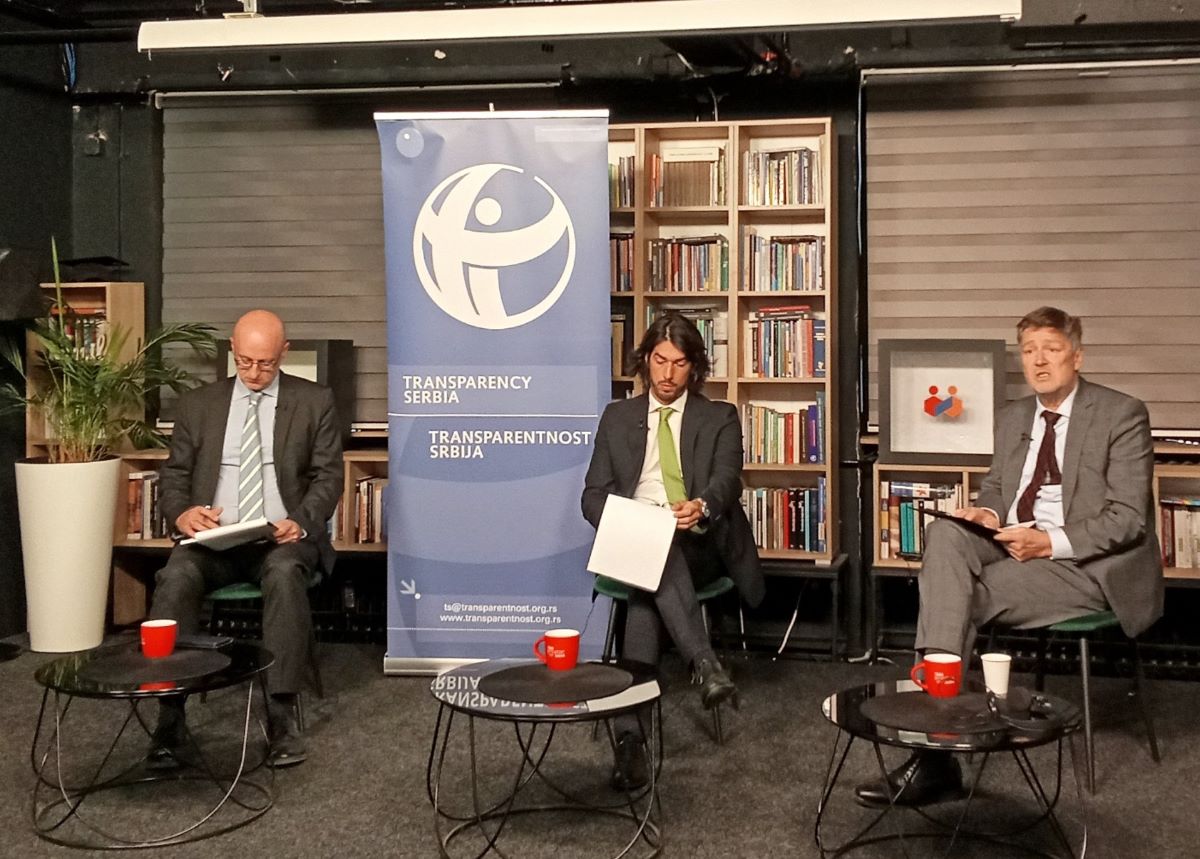
The local self-government transparency index LTI 2026 remained at relatively low level 52 out of a possible 100 points. After several years of continuous growth, the average rating has now stagnated at the same level for the fourth year in a row, according to the survey Local Transparency Index - LTI 2026, which was presented today by Transparency Serbia.
 This year, the first place with a score of 97 is shared by the City of Novi Pazar, which has been at the top of the table for four years, with Veliko Gradište, which was ranked second in the previous two years. In third place is Tutin with the score of 90.
Amongst the top ten are Kanjiža and Kragujevac, who share fourth place (84), then Leskovac in sixth, Pirot in seventh (a jump from 11th place), Bor and Zrenjanin who share eighth place, while Novi Sad (26th last year) and Šabac (42nd last year) share tenth place.
Požarevac, Golubac and Prijepolje achieved significant progress in the standings.
At the bottom of the table are Preševo with 28 points, Bujanovac (31), Alibunar (32), Lucani (33) and Bosilegrad (33).
Among the largest cities, Belgrade is 89th with a score of 48 (it was 99th with 46), Novi Sad improved its score by nine points and reached 10th place from 26th. Niš, after last year's jump, lost eight points (58) this year and dropped from 16th to 35th place.
Although there are fewer big jumps and falls this year, there are still LGUs that, after an excellent rating, record a big drop in the next survey. Užice, Sokobanja and Zaječar are such examples. There are also examples of a multi-year decline after an excellent result - Sombor slipped three years in a row, from 88 and second positions, to index 66.
The Program Director of Transparency Serbia Nemanja Nenadić pointed out that the main conclusion of LTI 2026 is the continuation of stagnation at a low level, and that it is necessary to establish sustainable mechanisms — through local self-government acts, but also regulations at the republican level — that will precisely prescribe procedures, obligations and responsibility for their implementation. Experience shows that better results are achieved when laws provide for transparency and sanctions for violations and when these sanctions are actually applied, while repealing obligations quickly leads to a decline in good practice. LTI, as a long-term monitoring mechanism, continues to serve as an incentive for local governments to improve transparency, as well as for citizens to recognize where and how they can seek better results from their municipalities, said Nenadić.
The head of development cooperation of the Embassy of Switzerland, Philip Beutler, said that the results of the research allow local governments to see what they need to change in their work in order to be more transparent and responsible to citizens, and that stagnation means that additional efforts are necessary for progress.
As a positive, he stated that all LSGs this year published budget on their websites, because the budget is a pillar of transparency. Also, Beutler pointed out that there are two small municipalities at the very top of the list and that the size of the LSG is not a factor for achieving progress and ensuring greater transparency.
The head of the Department for Rule of Law and Human Rights of the OSCE Mission in Belgrade, Mauro Puzo, said that the most important thing is sustainability, so that good results become part of good practice in LSGs, and not the current commitment of individuals. The involvement of citizens in the decision-making process is of great importance for establishing trust in local authorities, and therefore all draft decisions should be published before they are on the agenda of local assemblies, Puzo said.
When it comes to the categories of indicator questions, improvement was recorded in only two areas, and deterioration in six. Research coordinator Zlatko Minić stated that the greatest growth was recorded in the field of "Information Booklets", which after last year's drop returned to 62.9%, although this is still below the levels of 2024 and 2023.
On the contrary, in the area of "Public Procurement" the multi-year continuous decline continues — after the abolition of the legal obligation to publish information on the contracting authority's website, the average dropped to only 36%. The "Budget" area maintained a solid level of 63.2%, with a noticeable increase in the number of public hearings that included public gatherings — 102 were held, i.e. 35 more than the previous year. For the first time, all municipalities and cities published their budgets on their websites, Minic said.
There are fewer and fewer LSGs that have been recording continuous growth or at least stagnation for several years. In the last two cycles, there were 33 such LGUs. Only two local governments — Veliko Gradište and Žabari — have a continuous increase in the rating since 2020, and two more — Novi Pazar and Bogatić — since 2021.
The president of the municipality of Veliko Gradište, Dragan Milić, said that the first place on the LTI 2026 list is the obligation for the municipality to establish a sustainable system in which cooperation with citizens will be achieved, greater trust in local authorities and a better quality of life will be achieved in general. As he assessed, it is not only important to publish documents and information, but to become a truly open administration and strengthen joint work with citizens.
The mayor of Novi Pazar, Nihat Biševac, said that the goal of this local self-government is for citizens to be informed about the work of the city authorities, about how and who makes decisions, so that they can get involved in their preparation in time. He particularly emphasized the importance of citizens getting involved in the process of preparing, adopting and implementing the budget and having all the information about how the money is spent.
The assistant to the president of the municipality of Tutin, Nihad Gusinac, said that the municipality is very underdeveloped, but that despite this, it made enormous efforts to achieve progress and reach the third place on the list of LTI 2026. As he stated, this was achieved through greater transparency, as well as the fact that the municipality "opened its doors wide to citizens".
The President of the Municipal Assembly of Kanjiža Žombor Ujvari said that daily work is needed on the transparency of the work of the municipal authorities and that the municipality will continue to work on the timely publication of all documents and the inclusion of citizens in the decision-making process.
Kragujevac mayor's assistant Vasiljka Mikić said that the city progressed by five points compared to last year, because the local administration published documents and information, worked continuously all year on this, listened to suggestions and changed what was not good. As she stated, the process of modernization of local self-government and the fact that the City listens to the needs of citizens and fulfills them, contributed to the progress.
Bad results overall or in some categories do not necessarily mean that corruption is widespread in those areas and in those LGUs. Similarly, good results do not guarantee that there is no corruption in a LGU, but they reduce the possibility of mismanagement or corruption going undetected. LTI measures transparency, which is one of the most important anti-corruption preventive mechanisms, and the rating reflects the situation at the moment when the research was conducted, that is, when the results were verified.
Full report, table and presentation at www.lti.rs or TS website
COnference recording at Youtube kanalu TS.